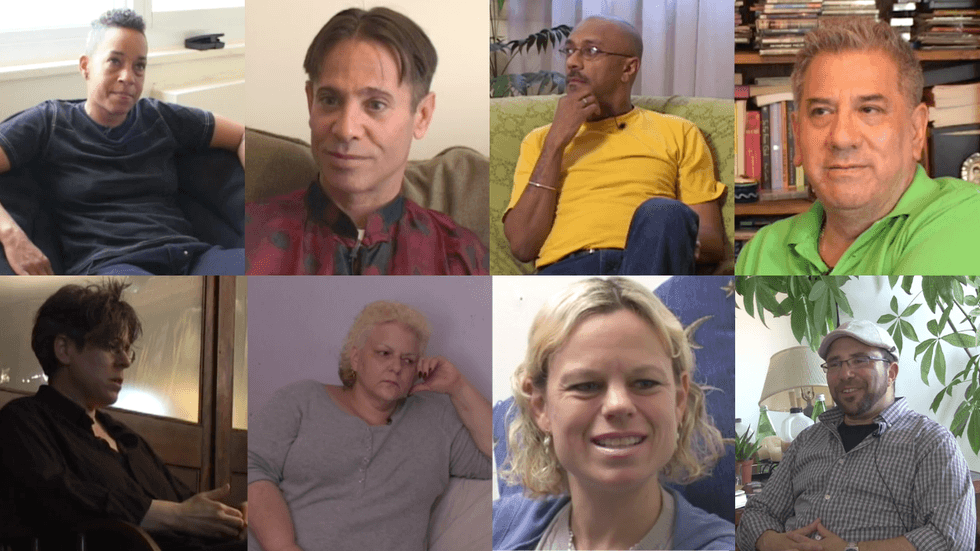
Sarah Schulman and Jim Hubbard both knew personally the devastation that the AIDS crisis had on New York City. As early members of the activist group ACT UP New York, they also saw firsthand the success of social justice movements launched in its wake; successes they did not want forgotten.By 2001, the disease had killed more than 82,500 New Yorkers, and millions globally. Schulman, a writer and journalist, and Hubbard, a documentary filmmaker, began interviewing surviving activists from ACT UP New York. Soon, the ACT UP Oral History Project was born.“What we wanted to do was to give as many people as possible the opportunity to tell their story in their own words,” Hubbard told The Advocate. Now, “what we want is for the history of ACT UP and the history of AIDS to be in mainstream U.S. history, right where it belongs.”ACT UP New York, one of the world’s most prominent HIV activism groups, was launched in 1987 to demand the development of HIV treatments and better government support for people living with HIV.Twenty-five years later, the digital archive of their work is vast. Schulman and Hubbard archived interviews with 188 AIDS activists, including audio, video, and written transcripts. With help from filmmaker James Wentzy, the group also collected more than 2,000 hours of archival footage, Schulman said.As of 2026, the project’s public website has had more than 14 million visits, and its content has been downloaded more than 600,000 times, according to Schulman. “Two people can do a lot,” she said. Buttons adorn an activist's vest at the New York City AIDS Memorial. Jack Walker/The Advocate The website boasts hours of interviews with activists and indexes them by topic, from discussions around specific campaigns, like Target City Hall, to broader discussions of race and gender within the group. One goal of the archive was to capture the diversity among its activists, Hubbard said.AIDS activists were “usually portrayed as cute, white men, young
How do ordinary people change the world? These New York City AIDS activists left a record
This is a summary from The Advocate. Read the complete article on their website.
Read Full Article on The Advocate
Opens in a new tab. QueerLine is not responsible for third-party content.
The Advocate
This article was automatically aggregated from The Advocate, a trusted LGBTQ+ news outlet. QueerLine curates headlines from verified sources to keep the community informed.