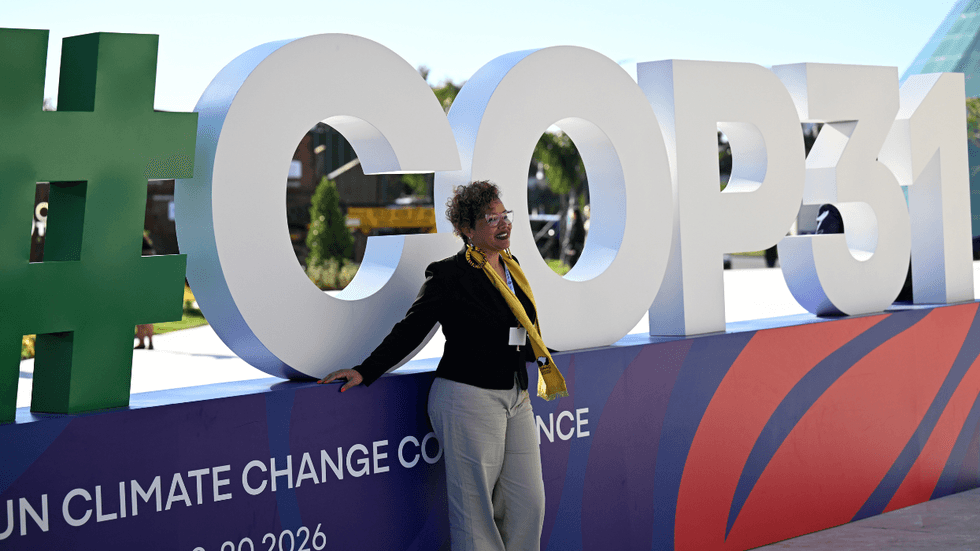
On Monday, global leaders convene in Antalya, Türkiye, for COP31, the UN climate conference. The summit follows the hottest summer in 132 years in the United States and one of Europe’s deadliest, with at least 35,000 deaths attributed to four heatwaves.Governments will build on last year’s agreement in Belém to develop a “just transition” mechanism. That agreement committed to a shift to clean energy that “leaves no one behind,” emphasizing the need to protect workers, uphold human rights, and advance gender equality. Yet the host of this year’s summit offers a clear example of how to exclude and alienate entire communities from climate action and its benefits.In September, Türkiye’s government launched a nationwide crackdown on individuals and groups advocating for LGBTQ rights. Police executed coordinated raids across 15 provinces, targeting nightclubs, offices, and activists’ homes. Police arrested 162 people, and more than 80 are held in pretrial detention. The government has also shut down the websites and social media accounts of LGBTQ activists and organizations, and an Istanbul court blocked access to the news site T24 after it deemed some content to be “LGBT propaganda.”Although homosexuality is not criminalized in Türkiye, this campaign follows years of escalating attacks on LGBTQ visibility and civic participation. Since 2015, Istanbul’s governor has banned the annual Pride march. Local efforts by students or smaller municipalities have also resulted in arrests and prosecutions. And President Tayyip Erdoğan has frequently used anti-LGBTQ rhetoric during campaigns, casting his opponents as “pro-LGBT” in order to appeal to conservative voters.This recent onslaught follows a familiar authoritarian playbook. From Putin in Russia to Orbán in Hungary, political leaders have weaponized anti-LGBTQ politics to distract from domestic crises and mobilize voters. They cast LGBTQ people as alien to the nation and thus threats to child
Op-ed: Türkiye’s LGBTQ+ crackdown casts a shadow over the UN climate summit’s promise to leave no one behind
This is a summary from The Advocate. Read the complete article on their website.
Read Full Article on The Advocate
Opens in a new tab. QueerLine is not responsible for third-party content.
The Advocate
This article was automatically aggregated from The Advocate, a trusted LGBTQ+ news outlet. QueerLine curates headlines from verified sources to keep the community informed.