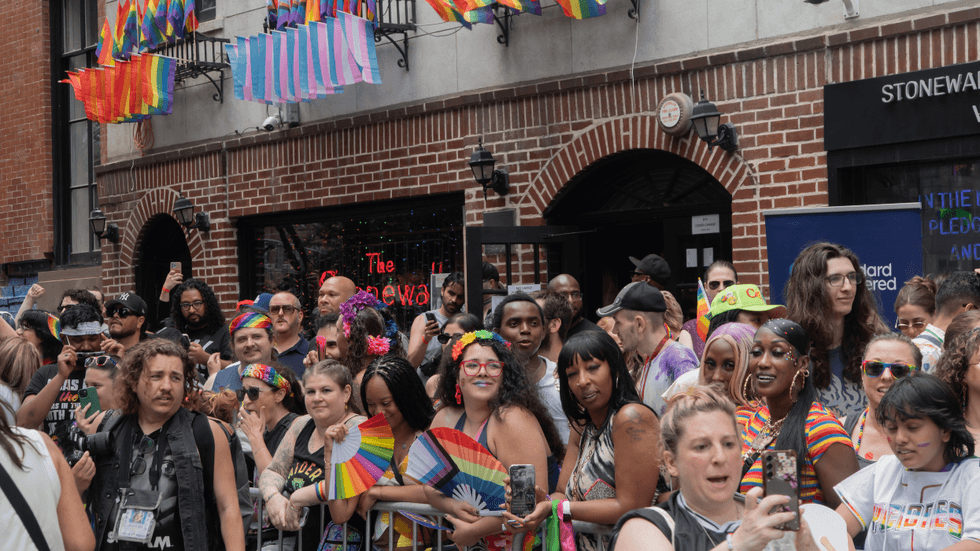
WorldPride has ended, but we keep returning to a question that followed us throughout it: What are we, as a community of people, responsible for preserving?Not simply buildings. Not simply photographs, artifacts, or plaques. Not even history in the traditional sense. Said plainly, we are responsible for preserving memory: the full, complicated, sometimes uncomfortable truth of how we got here, who brought us here, and what it cost them.At WorldPride in Amsterdam this year, we had the opportunity to speak alongside leaders working to protect queer museums, memorials, and historic sites around the world. Our circumstances were different, but the underlying challenge was strikingly similar: LGBTQIA+ communities have endured generations of persecution, violence, and deliberate erasure, and yet we have continually found ways to transform that oppression into heritage.That work feels especially urgent now.We are living through a moment of extraordinary noise. Political battles move at the speed of a headline. Institutions are being challenged. Language is being rewritten. Books, lessons, and pieces of history are being debated as though the people within them were theoretical.In that kind of chaos, preservation can sound passive. But it’s anything but that.To us, preservation is a decision. And it’s a decision to say: This happened. These people were here. Their lives mattered. Their courage changed us. And you do not get to make them disappear.That is what the Stonewall National Monument Visitor Center was created to do.The basics of LGBTQIA+ history tell us that the Stonewall Uprising began when people accustomed to harassment and arrest finally decided they had had enough. That protest in June of 1969 lasted six nights and helped catalyze a movement for LGBTQIA+ equality that continues to evolve today.Yet nearly half a century passed before the site became a national monument. When President Barack Obama designated Stonewall a national monument in 2016 — the firs
Preservation is an act of resistance
This is a summary from The Advocate. Read the complete article on their website.
Read Full Article on The Advocate
Opens in a new tab. QueerLine is not responsible for third-party content.
The Advocate
This article was automatically aggregated from The Advocate, a trusted LGBTQ+ news outlet. QueerLine curates headlines from verified sources to keep the community informed.