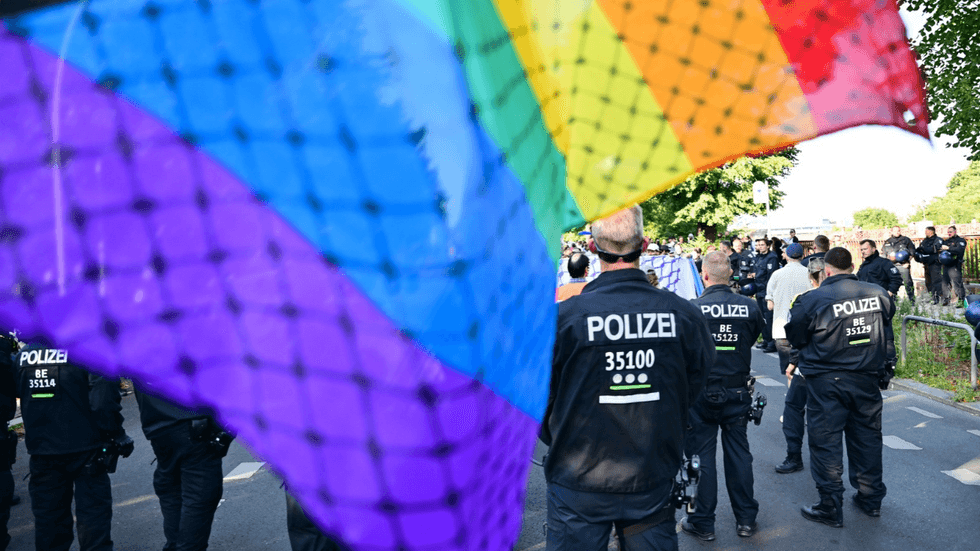
It’s back-to-school time, and for LGBTQ+ parents and their children — who remain on the front lines of the fight over whose families belong in the classroom — there are reasons for concern going into the new year, as well as reasons for hope.Two recent Supreme Court decisions have shaped a new reality for LGBTQ+ families in the classroom. The first, Mahmoud v. Taylor, challenged elementary school lessons that featured LGBTQ+ characters in storybooks. In this case, the Court gave some parents new grounds to seek exemptions from instruction that conflicts with their religious beliefs, and school boards, administrators, and teachers now must determine how to implement Mahmoud while providing an education that reflects the students in their classrooms. In a post-Mahmoud world, parents should pay attention to proposed changes in curriculum, opt-out procedures, and classroom materials and be ready to speak up when those changes single out LGBTQ+ people or erase them from the classroom.The other major cases for LGBTQ+ families in schools are West Virginia v. B.P.J. and Little v. Hecox. The Court decided that states may exclude transgender girls from girls’ school sports under the laws challenged in those cases. The decision could affect transgender kids across the country, but that does not mean the issue is settled. At the core of this decision is the choice to give power back to states and communities. Now is the time to speak out for trans rights, even if you yourself are not trans or do not have a trans child. Solidarity in this moment will show that we will not be divided by people who wish to use girls’ sports as a weapon to demonize trans children.In addition to navigating the cases above, there are concrete ways you can advocate for inclusion in your child’s classroom:Know your school’s policies. Find out what your district says about LGBTQ+ students and families, curriculum, parental notification, student privacy, and extracurricular activities.Ask q
LGBTQ+ families face a harder school year — but they are not powerless

This is a summary from The Advocate. Read the complete article on their website.
Read Full Article on The Advocate
Opens in a new tab. QueerLine is not responsible for third-party content.
The Advocate
This article was automatically aggregated from The Advocate, a trusted LGBTQ+ news outlet. QueerLine curates headlines from verified sources to keep the community informed.