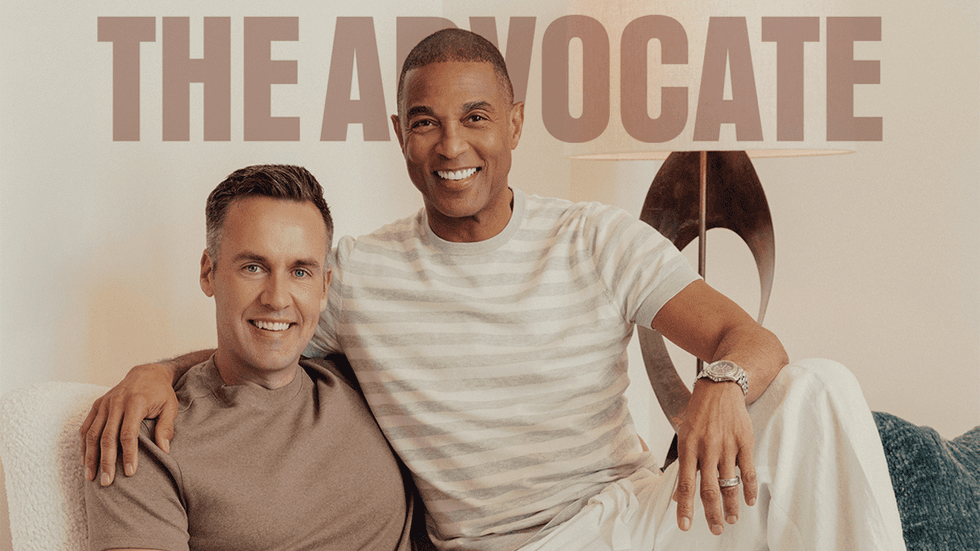
When I sit down with Don Lemon and husband Tim Malone over Zoom for this cover story, nothing works. The calendar invite never made it to Malone. The video feed is frozen — Lemon can hear me, but I cannot see him. The connection drops. Lemon is somewhere in his Manhattan apartment fixing lunch, and when he tries to talk me through the technical situation, he cuts out mid-sentence. We establish, after some back-and-forth, that he is going to switch to AirPods, which requires him to stay in the room he is in; otherwise, he will lose the signal entirely. Then we wait. Malone, meanwhile, appears on screen looking completely unbothered. “Hey, guys,” he says. “How are you?” Don LemonSequoyah Wildwyn-DechterThey are juggling pets, glitches, travel schedules, court dates, and the strange rhythms of life under constant public scrutiny. One moment, Lemon is discussing constitutional protections for journalism. Next, he is interrupting himself to ask whether one of their dogs has been fed.The oscillation between gravity and domesticity feels strangely perfect for this chapter of Lemon’s life. He has become, in the eyes of many Americans, less like a television anchor and more like a companion navigating democratic institutional collapse alongside them in real time.From cable news star to independent media powerhouse Lemon has already lived several public lives.There was the ambitious young reporter from Louisiana with the relentless local news hustle, climbing the television industry ladder that often tolerated Black men only so long as they remained carefully legible to white America. Then came the CNN years, when Lemon became a nightly presence in millions of homes during an era defined by Donald Trump’s first term: COVID-19, racial unrest after George Floyd was killed by a white Minneapolis police officer, and democratic instability after Trump refused to accept the outcome of the 2020 election. Lemon was celebrated and mocked; he was polarizing and comforting
Don Lemon was written off. Then everything changed
This is a summary from The Advocate. Read the complete article on their website.
Read Full Article on The Advocate
Opens in a new tab. QueerLine is not responsible for third-party content.
The Advocate
This article was automatically aggregated from The Advocate, a trusted LGBTQ+ news outlet. QueerLine curates headlines from verified sources to keep the community informed.