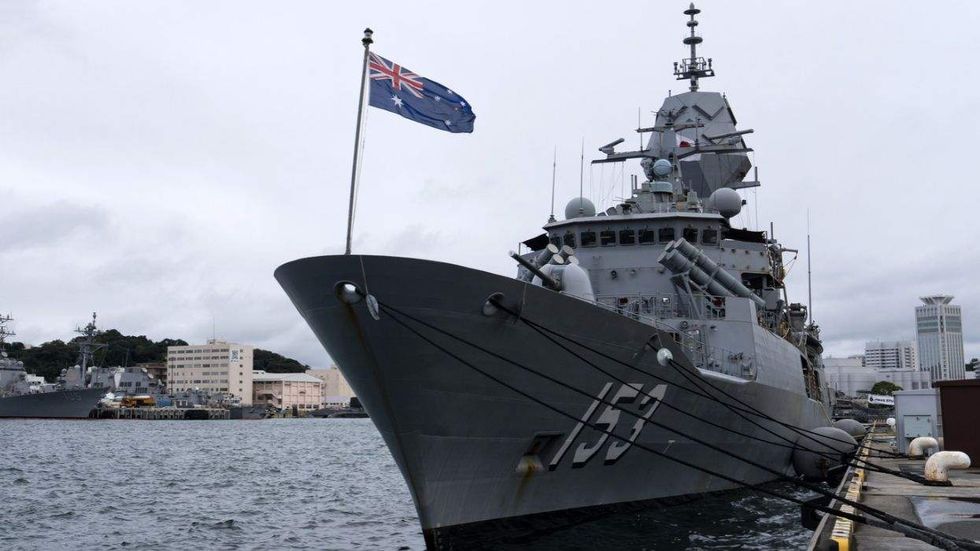
President Donald Trump’s ban on trans military service has led Australia to effectively bar transgender and nonbinary sailors from its nuclear-powered submarine training program.The problem stems from the trilateral security partnership AUKUS among the U.S., Australia and the United Kingdom. As part of that agreement, Australian sailors preparing to serve on nuclear-powered submarines must train on U.S. boats, according to The Guardian.That means that while the Australian Defence Force allows transgender and nonbinary people to serve, those sailors cannot begin the required training for this assignment.Related: Pete Hegseth wants trans troops gone. U.S. Navy & USMC review boards keep finding reasons to keep them“ADF personnel undertaking duty in the US (including training) are required to comply with US policy,” an internal ADF brief obtained by The Guardian reads. “Consequently, transgender and nonbinary ADF personnel and ADF career applicants are currently unable to commence the SSN [nuclear-powered attack submarines] training pathway.”Trump implemented a ban on trans service members in his first term, but President Joe Biden reversed it in 2021, before the announcement of the AUKUS partnership. Australia does not operate its own nuclear submarine fleet, but under AUKUS, hundreds of sailors and officers train on U.S. nuclear submarines and at U.S. bases.The ADF’s policy shows how U.S. restrictions can limit career opportunities for Australian personnel, even when their own military permits them to serve.Royal Australian Navy Rear Adm. Tish van Stralen said at an October defense event that the ADF must comply with other countries’ policies when sending personnel abroad, The Guardian reported. Related: Donald Trump signs new executive order affecting transgender military members“We also have an obligation, a duty of care to our people, so we do not want to put our people into any sort of harm’s way or anything that might adversely affect them,” s
Trump’s transgender military ban is derailing careers in another country’s navy
This is a summary from The Advocate. Read the complete article on their website.
Read Full Article on The Advocate
Opens in a new tab. QueerLine is not responsible for third-party content.
The Advocate
This article was automatically aggregated from The Advocate, a trusted LGBTQ+ news outlet. QueerLine curates headlines from verified sources to keep the community informed.