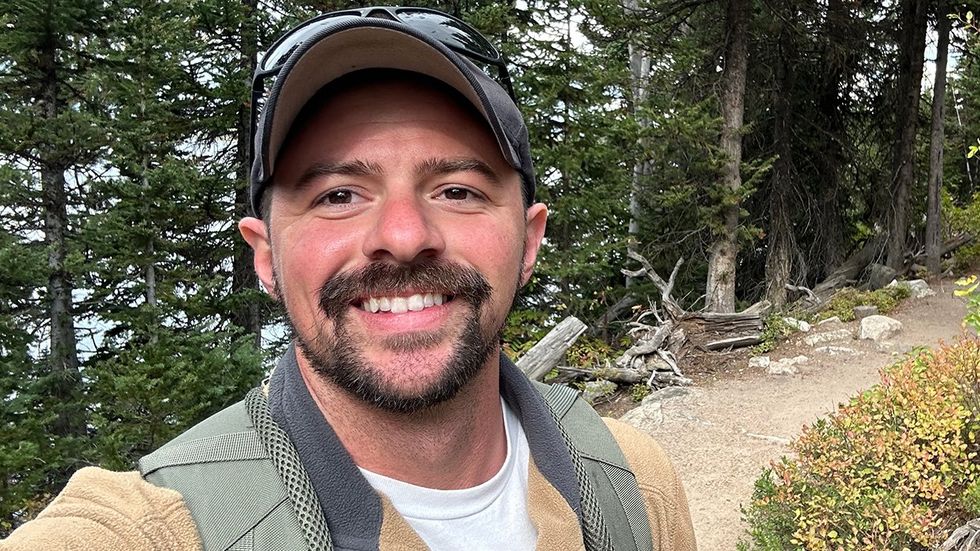
By the time Army Reserve 2nd Lt. Nicolas Talbott arrived at his unit Saturday evening, he had decided that, no matter what happened, he would leave with his head held high.He had driven nearly two hours to receive paperwork beginning the process of removing him from the military under President Donald Trump’s transgender service ban. Another lieutenant, a close friend, would hand him the documents. His battalion commander would join by video. People he considered family would help carry out a policy he is suing to overturn.“This is a close personal friend of mine who knows the scope of my situation,” Talbott told The Advocate. “So it was definitely a very emotionally charged moment.”His commander had warned him that the proceedings were coming. Knowing did little to soften the experience.“It’s like I’ve been teetering on the edge of a cliff for a while now, and finally somebody came along and pushed me over the edge,” he said.Related: Pete Hegseth is trying to force this transgender soldier out of the military. He won't leave voluntarilyTalbott, the lead plaintiff in one of the principal challenges to Trump’s ban, is now confronting the separation process while a ruling protecting currently serving plaintiffs remains on hold.In a Wednesday notice to the court, attorneys in Talbott v. United States identified six plaintiffs facing involuntary separation proceedings and urged the U.S. Court of Appeals for the District of Columbia Circuit to immediately issue its mandate, the procedural step that would make its ruling effective.For Talbott, the consequences reach beyond his own career. He thinks about the soldiers who will notice his absence, the projects he may have left unfinished, and whether he will be allowed to stay in contact with his unit.“And my mind right now goes to my soldiers,” he said. “What are they going to think when I don’t show up this month? How are they going to react?”Related: Meet the transgender Army lieutenant who
He drove two hours to his Army unit. A friend handed him papers to force him out just for being trans
This is a summary from The Advocate. Read the complete article on their website.
Read Full Article on The Advocate
Opens in a new tab. QueerLine is not responsible for third-party content.
The Advocate
This article was automatically aggregated from The Advocate, a trusted LGBTQ+ news outlet. QueerLine curates headlines from verified sources to keep the community informed.