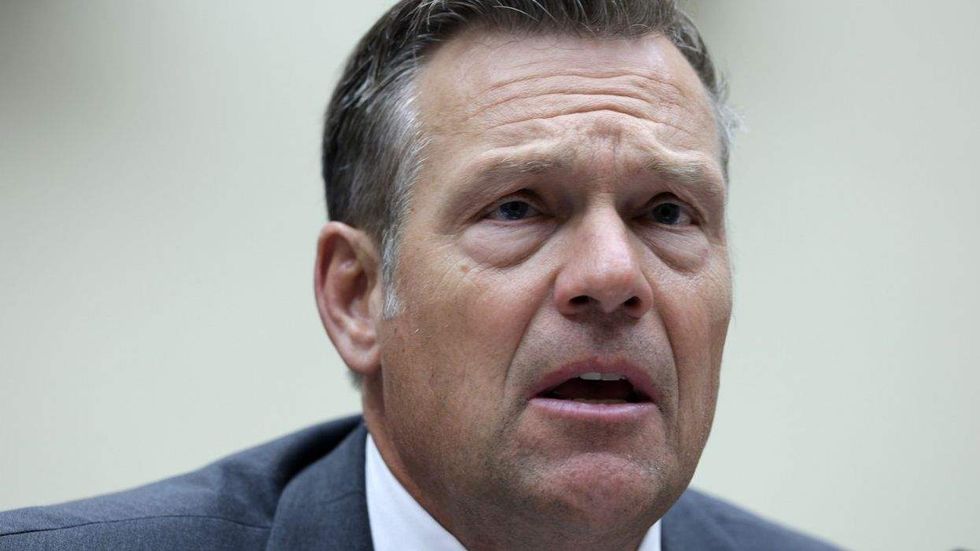
In court this week to challenge the state’s driver’s license and restroom restrictions, intersex and transgender Kansans are having to explain some of their social media posts as the state’s defense turns to them as part of its strategy.As The Advocate has reported, plaintiffs in Doe v. Kansas are seeking to block Senate Bill 244, a sweeping law that invalidated driver’s licenses bearing gender markers that differ from a person’s sex assigned at birth and restricts restroom use in government buildings. The ID requirement has exposed them to scrutiny in ordinary interactions, even after they complied with the law, plaintiffs told The Washington Post. Related: Kansas voided 1,700 licenses. Now its anti-trans law is being tested in courtThe ACLU of Kansas is backing the lawsuit.Republican Attorney General Kris Kobach, who has a history of supporting anti-LGBTQ+ views and legislation, argues that the plaintiffs have not shown the law harmed them. To challenge their claims that the law could effectively out them as transgender or intersex, state attorneys have turned to the plaintiffs’ own social media posts, some of them years old, arguing that public disclosures undermine their expectation of privacy.The Topeka Capital-Journal reports Kobach cross-examined one of the plaintiffs challenging the law – Dakota West, an intersex woman who previously lived in Reno County and is now a resident in Tennessee – about a Facebook post where West spoke about being intersex.“Why would you post something that’s had 2 million views?” Kobach said, questioning her concern about being outed while having a public figure profile. West said she considered the post a “situational difference” from encountering someone in real life. “I’ve never seen anyone in person that’s followed me,” she said. “Sometimes, I think of it as numbers on a page.”West, who was born with XY chromosomes but whose body does not respond to male hormones, had held a driver’s lic
Kansas AG Kris Kobach uses transgender people’s social media posts to defend forcibly outing them
This is a summary from The Advocate. Read the complete article on their website.
Read Full Article on The Advocate
Opens in a new tab. QueerLine is not responsible for third-party content.
The Advocate
This article was automatically aggregated from The Advocate, a trusted LGBTQ+ news outlet. QueerLine curates headlines from verified sources to keep the community informed.