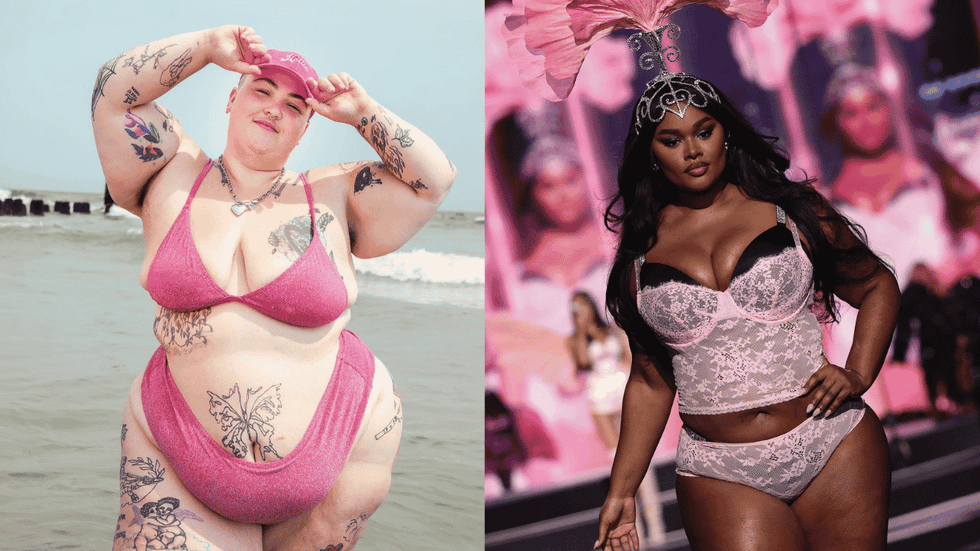
It’s been nearly a decade since Shay Neary landed her first big campaign — and made history as the first openly transgender plus-size model to appear in a major fashion campaign.While she never expected to smash glass ceilings through her collaboration with the brand Coverstory, Neary says she used the opportunity as a platform to speak up for plus-size people, trans visibility, and body positivity for all.“It took off, it got a lot of press, I became the first plus-sized trans model in the U.K. to get a campaign as well,” Neary says. “It extended internationally, and then I was known internationally. What’s weird is that you don’t realize, being in a marginalized intersectionality, how much representation really matters.” Barrier-breaking model Precious Lee walks the runway for the Victoria’s Secret Fashion Show 2025.Dimitrios Kambouris/Getty Images for Victoria’s SecretHer breakthrough success didn’t happen in a vacuum. The 2010s marked a cultural shift toward size inclusion and body positivity in the United States. Though the fat liberation movement has been organizing for size inclusivity since the 1970s, the 2010s were defined by the rise of platforms like Instagram and Tumblr that allowed people who’d been pushed aside by mainstream beauty standards to gain traction and visibility. Soon, phrases once only seen in fat liberation spaces like “body positivity,” “all bodies are beautiful,” and “beauty at any size” became popular hashtags online and were even incorporated into major ad campaigns.From models like Tess Holliday, Paloma Elsesser, Precious Lee, and Candice Huffine to scholars like Sonya Renee Taylor and Roxane Gay, body positivity had finally entered the popular lexicon, largely due to the power of social media. Neary first began posting online as a way to journal her experiences as a plus-size trans woman, an intersection she rarely saw represented anywhere. What began as a way to express herself became a beacon for
Body positivity is not ‘over’
This is a summary from The Advocate. Read the complete article on their website.
Read Full Article on The Advocate
Opens in a new tab. QueerLine is not responsible for third-party content.
The Advocate
This article was automatically aggregated from The Advocate, a trusted LGBTQ+ news outlet. QueerLine curates headlines from verified sources to keep the community informed.