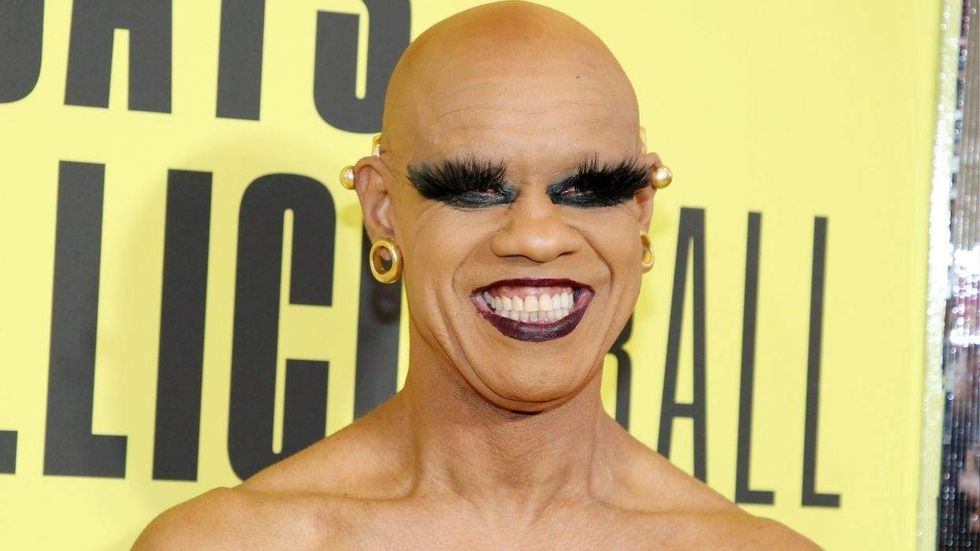
Kevin Aviance was fixing his makeup when he appeared on camera from New York City, apologizing for the noise. There were shows to prepare, music to finish, Pride weekend approaching. Twenty years after a group of men attacked him on a Manhattan street, the towering drag artist and queer dance music icon was busy being Kevin Aviance.“To be honest with you, I don’t know what else to do, girl,” he told The Advocate the Wednesday before New York Pride, two weeks after the anniversary of the attack. “I can’t sell hot dogs, girl. I would if I could, but I can’t, so I won’t. But this is what I know how to do.”For decades, Aviance has commanded dance floors with a shaved head, sculptural costumes, towering heels, and a presence that blurs the line between drag queen, recording artist, and nightclub icon. He isn’t just part of the party — he’s the reason people remember being there.Related: Four charged in Kevin Aviance gay bashingA queen built for the dance floorAviance grew up in Richmond, Virginia, and moved to Washington, D.C., as a young adult. At Tracks, the legendary club that incubated a generation of queer performers and DJs, he competed in runway and voguing battles and met Juan Aviance, founder of the House of Aviance. “Tracks is where I was born,” he later told The Washington Post.He became one of the house’s earliest members, taking its name as his own, as the group built its own ballroom scene in D.C., after feeling shut out of parts of New York’s. He moved to Miami in 1991 to sharpen his craft, then to New York two years later, appearing in Madonna’s 1994 “Secret” video and becoming a defining figure in the city’s gay club world. His recording career produced dance hits like “Din Da Da,” “Alive,” and “Give It Up.” His 1996 track “Cunty” became an underground anthem whose reach would eventually stretch far beyond the clubs that first embraced it.He was also a fixture of circuit party culture, the sprawling,
Kevin Aviance survived an antigay hate crime. Twenty years later, he warns LGBTQ+ people not to disappear
This is a summary from The Advocate. Read the complete article on their website.
Read Full Article on The Advocate
Opens in a new tab. QueerLine is not responsible for third-party content.
The Advocate
This article was automatically aggregated from The Advocate, a trusted LGBTQ+ news outlet. QueerLine curates headlines from verified sources to keep the community informed.