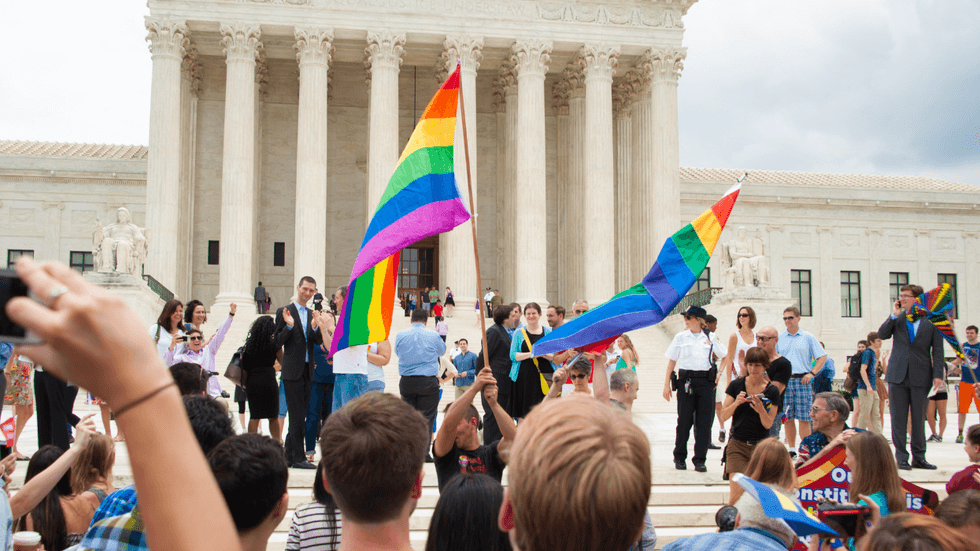
On Saturday, the United States will mark its 250th anniversary, and, shortly before that, on June 26, it marked 11 years of marriage equality for all Americans. Both occasions are celebrations of freedom.We celebrate the freedom to speak our minds, build our lives, practice our faiths, and pursue happiness in our own way. Yet this year, as some far-right religious leaders renew and amplify calls to roll back marriage equality, it is worth asking one simple question:What actually happened over the past decade after same-sex couples gained the freedom to marry?The answer is remarkably ordinary and, some might even say, boring. Couples married. Families gained legal protections. And no one lost their freedom to adhere to their own traditions or beliefs.It's really that simple.Rewind a bit to before the historic 2015 U.S. Supreme Court decision in Obergefell v. Hodges, the case that brought marriage equality to the entire country. For decades, opponents of marriage equality warned that recognizing same-sex couples would somehow threaten religious liberty, undermine marriage itself, weaken families, and unravel the social fabric of our nation. Quite dire predictions, right?Spoiler alert: Marriage equality did not "destroy the sanctity of marriage." It didn't silence people of faith. It didn't force religious institutions to abandon their beliefs.Instead, it allowed nearly 1.2 million Americans to participate more fully in one of our nation's most cherished institutions.Jim Obergefell, Family Equality board member and lead plaintiff in Obergefell v. Hodges, said, "Justice Kennedy wrote in the Obergefell decision: 'No union is more profound than marriage, for it embodies the highest ideals of love, fidelity, devotion, sacrifice, and family.' No matter how we define or form our families, those ideals make us something greater than we were. Each of us should have the freedom to live up to those ideals if we choose to."A new report released last month by Interfaith Alliance m
Marriage equality didn’t threaten America. It expanded freedom
This is a summary from The Advocate. Read the complete article on their website.
Read Full Article on The Advocate
Opens in a new tab. QueerLine is not responsible for third-party content.
The Advocate
This article was automatically aggregated from The Advocate, a trusted LGBTQ+ news outlet. QueerLine curates headlines from verified sources to keep the community informed.