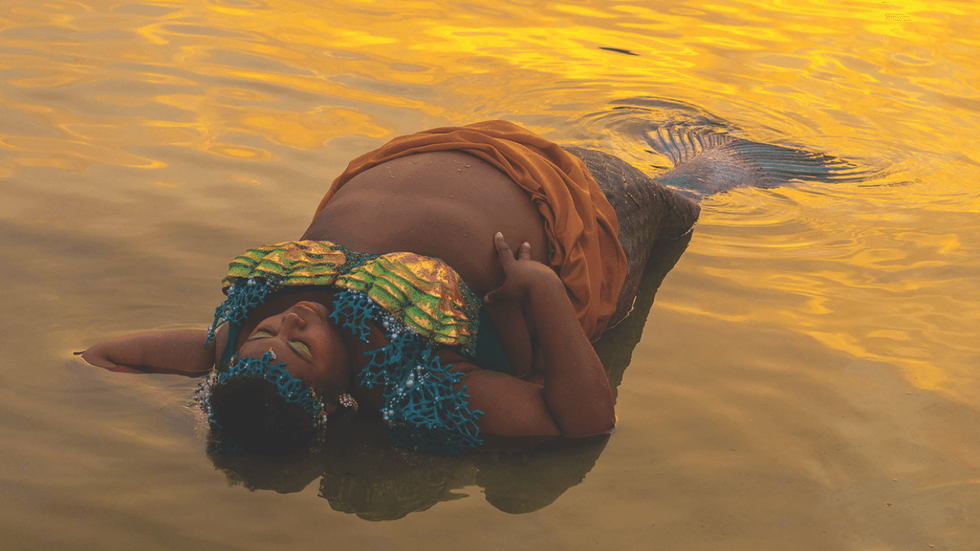
In her youth, Chè Monique remembers the life-changing experience of watching the 1989 animated Disney film The Little Mermaid. “I would love to be part of that world,” Monique recalls thinking of that underwater fantasia and its magical finned denizens. Afterward, she felt a special connection with water and the ocean — and also something of a pull.While The Little Mermaid sparked her youthful fascination with mermaids, it was the 2012 Capital Pride Parade in Washington, D.C., which crystallized this calling as an adult. The theme of that parade was “What’s Your Fantasy?” The answer, of course, was to become a mermaid, and this response marked the beginning of a surprising career. Today, Monique is very much part of the merfolk world. These are no legendary sea creatures, but real-life people who adorn tails, cosplay, and find creativity and community with one another. Across the world, merfolk — many of them, like Monique, are also queer — gather at conventions, stage underwater ballets, perform in pageants and children’s pool parties, and advocate for water conservation. Monique herself is a model, a “mertivational” speaker, and a certified professional who instructs others in swimming and water safety. It’s not easy being a merperson. For one, the cost can be prohibitive. At the time of Monique’s mer-awakening, a tail crafted from silicone was, at minimum, $3,000. But in recent years, retailers like Mertailor, Fin Folk, and Fin Fun have begun offering more affordable options out of fabric, with an entry point of only $100. Chè MoniquePhoto by Izriella/edited by Mermaid MystikaIn addition to cash, Monique has observed that human cultural expectations can make this world feel inaccessible. She recalls once seeing a fat Latina woman wearing an Ariel shirt — and she was inspired to create clothing that was more representative than that slim white character. Monique thought at the time, “It would be really rad if someone who looked more
Mermaids are here and queer—just ask Chè Monique
This is a summary from The Advocate. Read the complete article on their website.
Read Full Article on The Advocate
Opens in a new tab. QueerLine is not responsible for third-party content.
The Advocate
This article was automatically aggregated from The Advocate, a trusted LGBTQ+ news outlet. QueerLine curates headlines from verified sources to keep the community informed.