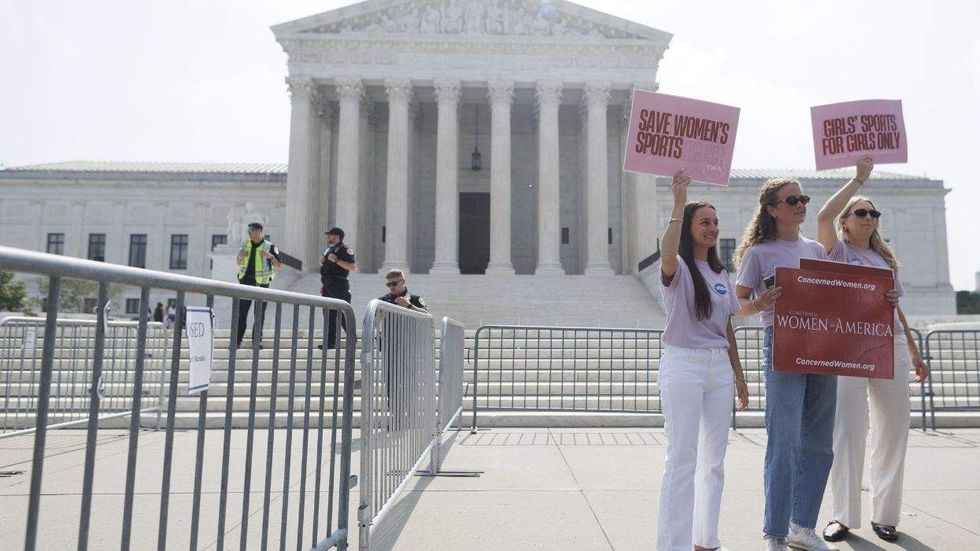
On Tuesday, the U.S. Supreme Court held in West Virginia v. B.P.J. (decided together with Little v. Hecox) that neither Title IX nor the Equal Protection Clause prevents states from barring transgender girls from girls’ sports. But the majority opinion, written by Justice Kavanaugh, is a narrow one, and its limits are significant. Here are the most important.It permits these bans—it doesn’t require themThe Court held that states and schools may exclude transgender girls from girls’ and women’s teams. It did not hold that they must. The decision removes a constitutional and statutory obstacle to the bans; it does not impose them. This ruling does not require states and schools that have chosen not to discriminate against transgender girls to abandon those inclusive policies.It leaves the door open for inclusive policiesThe Court pointedly declined to foreclose inclusion. It left open the question of whether schools that want to let transgender girls play on girls’ teams may do so. In a key footnote, the Court called this a “distinct question,” not presented in this case, and stressed that “[n]othing in this opinion is intended to decide” it. That question is now moving through the lower courts, and schools that welcome transgender athletes remain free to adopt and defend inclusive policies.It is limited to the sports contextThe Court repeatedly emphasized that sports are distinct, and it tied both halves of its analysis, the Title IX holding and the equal protection holding, to that distinctiveness. The majority drew an explicit contrast with “a typical employment or educational opportunity where equal protection often may require that the government generally treat an individual without regard to the individual’s sex.” The opinion does not present its reasoning as a general rule for other settings such as classrooms, restrooms, or school programs.It does not resolve the underlying scienceThe Court did not find that transgender girls who hav
What the Supreme Court did not decide in the trans sports case
This is a summary from The Advocate. Read the complete article on their website.
Read Full Article on The Advocate
Opens in a new tab. QueerLine is not responsible for third-party content.
The Advocate
This article was automatically aggregated from The Advocate, a trusted LGBTQ+ news outlet. QueerLine curates headlines from verified sources to keep the community informed.