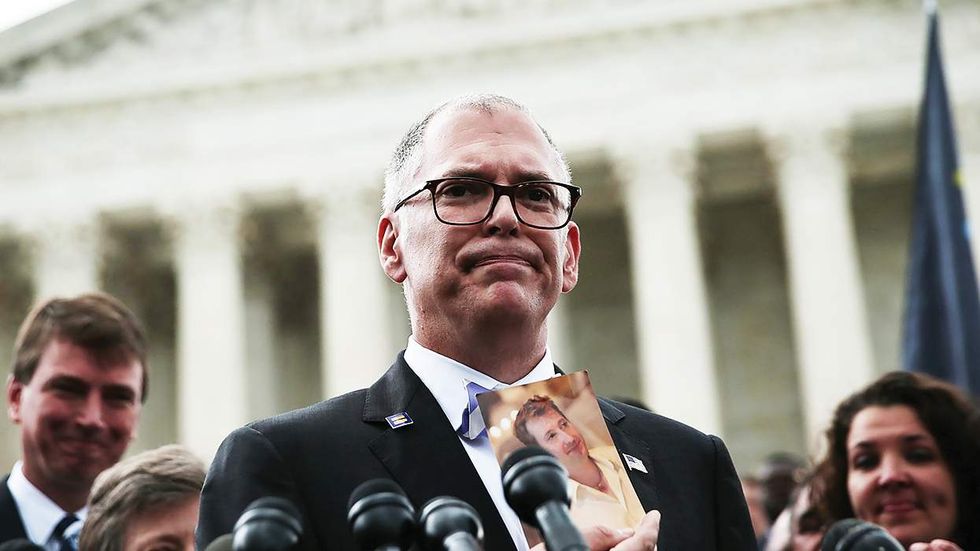
More than a decade after the U.S. Supreme Court legalized same-sex couples’ ability to marry nationwide, Jim Obergefell still sounds slightly startled when he hears his own name — especially now that conservatives are openly discussing overturning the ruling that bears it.“It’s surreal,” he says, laughing softly from his hotel room before coffee. “There are times I still have to remind myself when I hear or see Obergefell in the news. That’s not just a case. That actually means me.”In the eleventh year since the Obergefell v. Hodges ruling that transformed American civil rights law, the country the famous plaintiff helped reshape feels profoundly different from the euphoric 2015 summer morning when rainbow lights washed over the White House and couples flooded county clerks’ offices nationwide. Back then, marriage equality felt like a culmination. Now, it feels contingent. The man whose grief became one of the most consequential constitutional cases in modern American history spends much of his time thinking about whether the country could lose it all again.“We should not feel safe in any of the rights we enjoy,” he says.In the American civic imagination, Obergefell occupies a strange and intimate place. Brown belongs in textbooks. Roe became doctrine. But Obergefell remains deeply personal. It begins in hospice care, with a dying man named John Arthur and a husband fighting to ensure his name appeared correctly on a death certificate.That emotional clarity helped accelerate one of the fastest shifts in public opinion in modern political history. When Congress passed the Defense of Marriage Act in 1996, support for marriage equality nationally sat below 30 percent, according to Gallup. Today it hovers near 70 percent. Among Democrats, support exceeds 85 percent. Majorities of younger Republicans support it too. Plaintiff Jim Obergefell holds a photo of his late husband John Arthur after the U.S. Supreme Court handed down a ruling on same-sex ma
Jim Obergefell: ‘It breaks my heart’ that marriage equality could be overturned
This is a summary from The Advocate. Read the complete article on their website.
Read Full Article on The Advocate
Opens in a new tab. QueerLine is not responsible for third-party content.
The Advocate
This article was automatically aggregated from The Advocate, a trusted LGBTQ+ news outlet. QueerLine curates headlines from verified sources to keep the community informed.