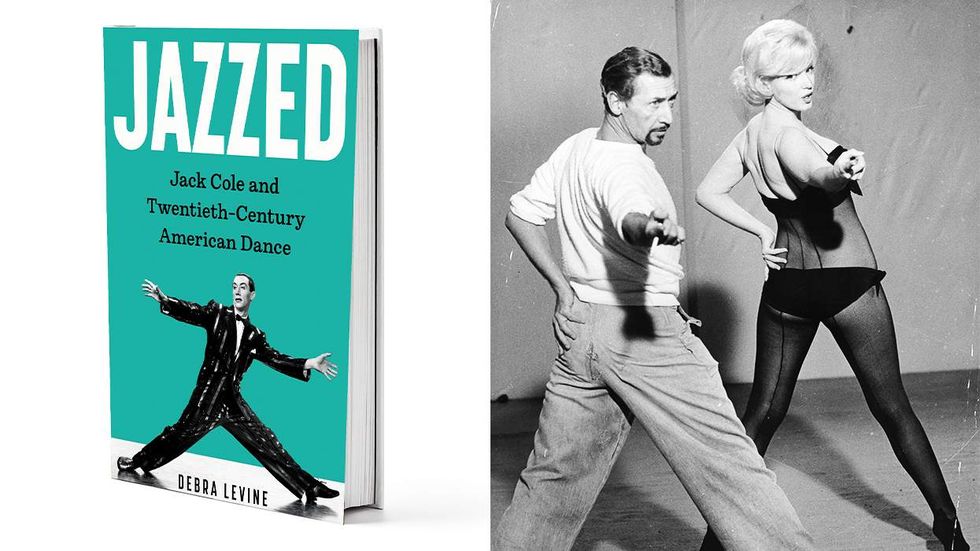
Even if you’ve never seen a Marilyn Monroe movie, you’ve probably, at some point in your life, viewed vintage film clips of the star’s iconic “Diamonds Are a Girl’s Best Friend” performance from 1953’s Gentlemen Prefer Blondes. In addition to Madonna paying homage to it decades later in her “Material Girl” video, that image of Monroe — dressed in skin-tight pink satin, drenched in jewels, and surrounded by gorgeous male dancers — might be one of the most famous pop-culture moments in history. But many don’t know the renowned queer choreographer behind the legendary number, Jack Cole.Fortunately, “Hollywood-fascinated” dance critic Debra Levine’s new, heavily researched biography, Jazzed: Jack Cole and Twentieth-Century American Dance, dives deep into the life and legacy of this brilliant but complicated man.“I had just seen Gentlemen Prefer Blondes in the summer of 2008 on the big screen at the Los Angeles Theatre in downtown L.A., and even I, a longtime dance critic, did not question who did the dance numbers,” Levine admits. “There’s the feeling that actors just break into dances on their own, and you rarely stop and think that a choreographer authored the movement.” Jack Cole and Marylin MonroeReinhard Archive-Ullstein Bild via Getty ImagesBut in a serendipitous moment soon after, Levine met experimental filmmaker Kenneth Anger, who told her, “Someone needs to write about Jack Cole.” She says that once she “connected the dots” and realized Cole was Marilyn’s exclusive choreographer who shared a six-picture canon with her, “I was fascinated — no, hooked!”Indeed, Cole went on to choreograph some of Monroe’s other most iconic performances on film, including scenes in There’s No Business Like Show Business and Some Like It Hot. And while dance legends like Bob Fosse, Gene Kelly, and Jerome Robbins cite Cole as an inspiration, his impact has been largely ignored by mainstream culture and Hollywood historians.
Discover Jack Cole, the gay man behind Marilyn Monroe's most iconic numbers
This is a summary from The Advocate. Read the complete article on their website.
Read Full Article on The Advocate
Opens in a new tab. QueerLine is not responsible for third-party content.
The Advocate
This article was automatically aggregated from The Advocate, a trusted LGBTQ+ news outlet. QueerLine curates headlines from verified sources to keep the community informed.