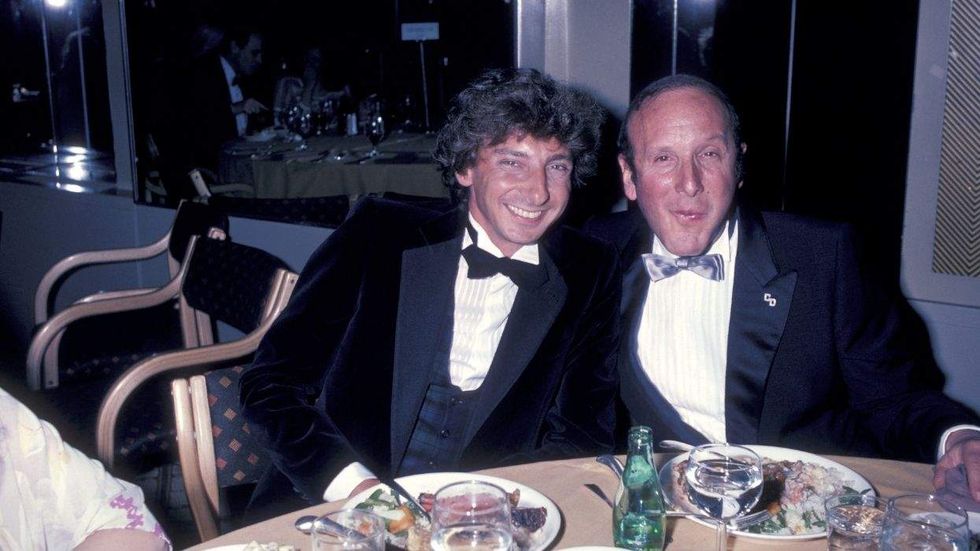
About twenty-five years ago, through a long-lost friend, I went to a party celebrating the establishment of the Clive Davis Department of Recorded Music at NYU’s Tisch School of the Arts.Sadly, I don’t remember much about that evening, but one thing really stands out. When Clive Davis walked in, it was like Moses parting the Red Sea. He was like a deity. I have to admit to being awestruck. I was too scared to approach him, and that would not happen today, for sure.One thing that I’ve done throughout my life is that when I meet someone of incredible stature, I read a book about them, whether a biography or memoir. For example, I’ve read about former Defense Secretary Clark Clifford, Katharine Graham, the former chairman of The Washington Post Company, and actors Burt Lancaster and Jimmy Stewart. Those are just a few examples.After reading those tomes, I feel like I know the person better. The same holds true for Davis. So when they die, I feel their loss more profoundly.The music industry lost perhaps its most consequential titan when Davis, at 94, died on Monday. He wasn’t just a legend; he was called the “man with the golden ears.” Besides that, I really do feel that we’ve lost a cornerstone of our cultural history.Related: Clive Davis, bisexual star-maker who changed American pop music, dies at 94That’s because music undoubtedly plays such a pivotal role in our lives. Songs make us happy, sad, transport us to a place and time, or bear witness to an evolving memory. And chances are that a song you love wouldn’t have existed if it weren’t for Davis.And I say that without exaggeration.He was the metaphorical maestro behind Whitney Houston, Barry Manilow, Janis Joplin, Aretha Franklin, Bruce Springsteen, Alicia Keys, Rod Stewart, Jennifer Hudson, and on and on. There simply isn’t room to list them all.He was the only non-performer ever inducted into the Rock and Roll Hall of Fame. Some would argue that the institution wouldn’t exist if it wer
Clive Davis gave LGBTQ+ people the soundtrack of our lives and a place in music
This is a summary from The Advocate. Read the complete article on their website.
Read Full Article on The Advocate
Opens in a new tab. QueerLine is not responsible for third-party content.
The Advocate
This article was automatically aggregated from The Advocate, a trusted LGBTQ+ news outlet. QueerLine curates headlines from verified sources to keep the community informed.