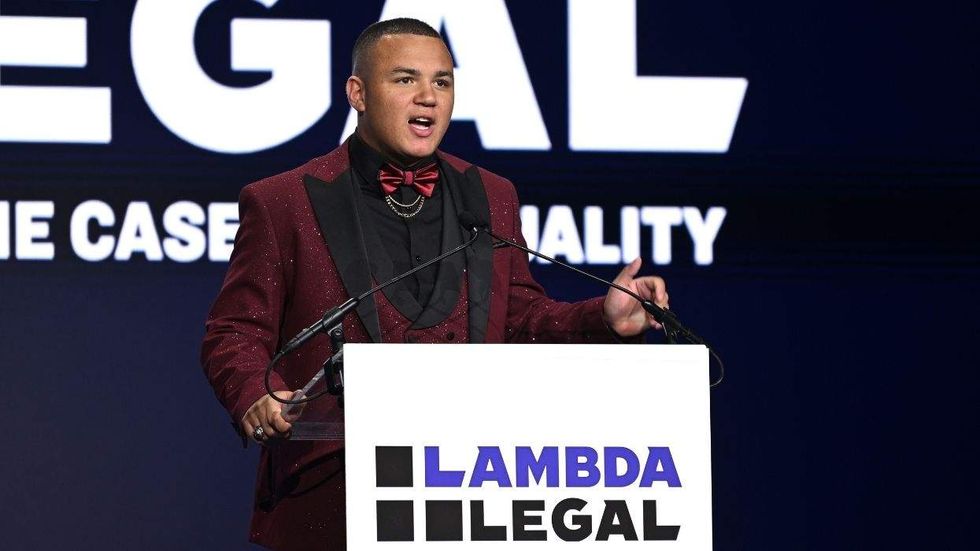
For a few weeks this spring, the door Isaiah Wilkins had been pushing on for years finally cracked open.In late May and early June, the U.S. Court of Appeals for the Fourth Circuit did two things few expected. First, it agreed to rehear Wilkins v. Hegseth, the case challenging the military’s ban on enlisting people living with HIV, before the full court. Then it clarified that, in doing so, it had lifted a stay that the Pentagon had been using to keep the ban in force. The practical effect was immediate: people with well-managed HIV could once again walk into a recruiting office and try to enlist while the case moves forward.“It just continues to show that there’s hope in the fight,” Wilkins, the lead plaintiff, told The Advocate. “Things were looking bleak after our oral arguments in Virginia. ... I think it just demonstrates that science can prevail.”Related: Two military members denied promotions for having HIV just won their lawsuitThe military career he was supposed to haveFor Wilkins, 27, the stakes are the life he was supposed to have.Wilkins, who is gay, grew up steeped in service. Most of his mother’s side of the family had worn the uniform, including his mother. He enlisted in the Georgia Army National Guard at 17 while attending Georgia Military College. Instructors there encouraged him to apply to West Point, and he was accepted to the U.S. Military Academy Preparatory School. He imagined a 20-year military career, possibly in aviation, flying medical evacuation aircraft.“You’re really there on the worst day of somebody’s life to help get them the help that they need,” he said.Then, during a summer training event at West Point, he was pulled away from his squad, ushered through back hallways to a colonel’s office, and told that routine entrance bloodwork had come back positive for HIV. His first question was whether HIV would kill him. His second question was whether he could stay in the military.The answer to the second question,
A federal court reopened the military to recruits living with HIV. For these men, it's personal
This is a summary from The Advocate. Read the complete article on their website.
Read Full Article on The Advocate
Opens in a new tab. QueerLine is not responsible for third-party content.
The Advocate
This article was automatically aggregated from The Advocate, a trusted LGBTQ+ news outlet. QueerLine curates headlines from verified sources to keep the community informed.