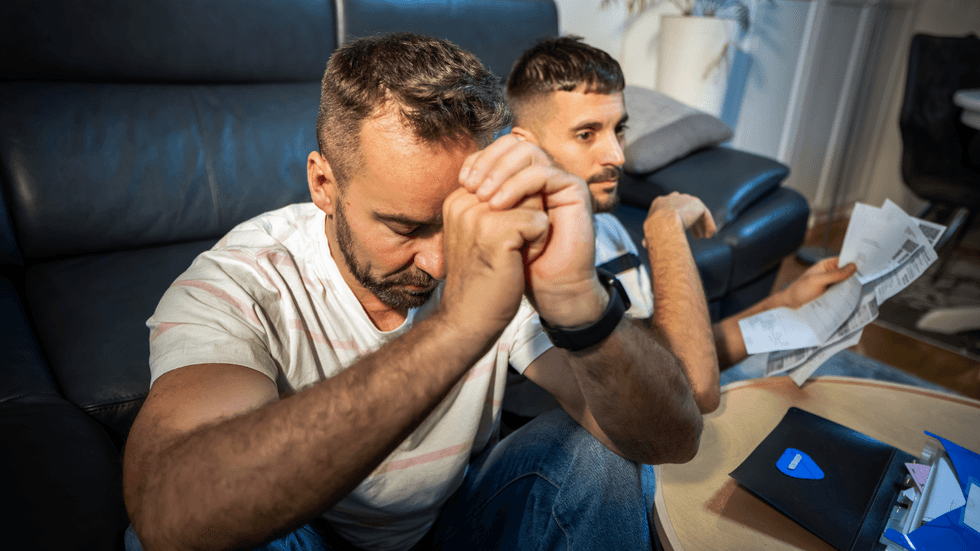
Years ago, I met with a young man who had fallen in love. There was nothing unusual about that fact. Millions of people fall in love every day. What made his situation different was that he had spent years making sure no one knew.He came from a country where being openly gay could destroy a career, fracture a family, invite violence, or worse. He and his partner rarely appeared together in public. They avoided photographs. They did not post about each other on social media. They did not introduce one another to relatives. They learned to survive by becoming invisible.Then they found themselves navigating the American immigration system. Suddenly, the very things that had protected them became obstacles. Immigration officials wanted evidence of a real relationship. They wanted photographs, correspondence, shared experiences, and documentation. The couple's challenge was not proving that their relationship was genuine. The challenge was proving a relationship they had spent years trying to hide.Related: Lawyers alarmed by immigration judge's 'atrocious' questions for gay asylum seekers After more than three decades as an immigration lawyer, I have come to believe that this is one of the least understood realities facing gay immigrants in America. Most Americans assume that the biggest barriers LGBTQ+ immigrants face exist overseas. They think about countries where homosexuality remains criminalized, where same-sex couples cannot marry, where police harassment is common, or where families reject children because of who they are.Those barriers are real. For millions of people around the world, they remain devastatingly real. But there are also barriers that emerge after immigrants arrive in the United States—barriers that are often invisible to everyone except those forced to navigate them.The American immigration system was largely built around assumptions about visibility. When people marry, they are expected to have photographs together. Families meet. Friends cele
LGBTQ+ immigrants struggle to prove relationships they had to hide to survive
This is a summary from The Advocate. Read the complete article on their website.
Read Full Article on The Advocate
Opens in a new tab. QueerLine is not responsible for third-party content.
The Advocate
This article was automatically aggregated from The Advocate, a trusted LGBTQ+ news outlet. QueerLine curates headlines from verified sources to keep the community informed.