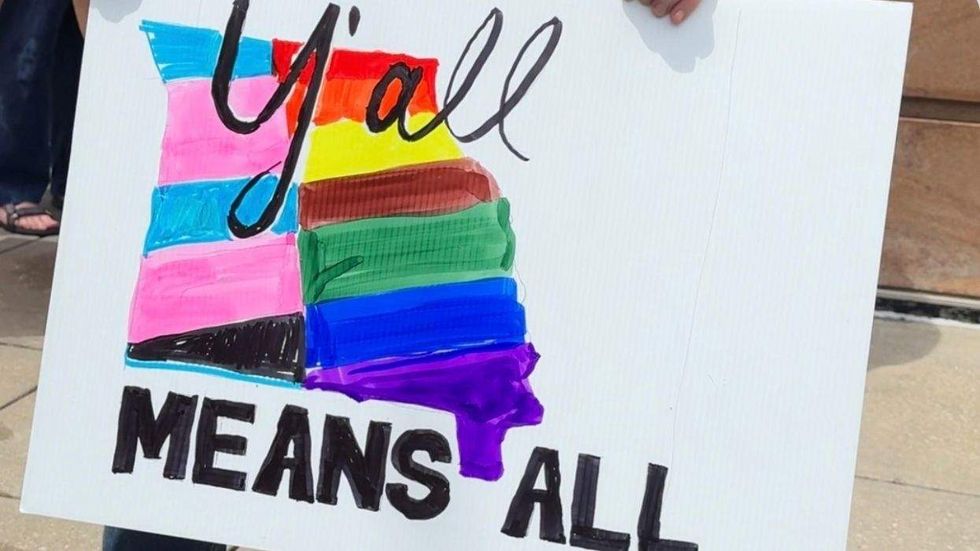
Driving along historic Route 66 in Edwardsville, Illinois, I heard the honking before I saw the crowd.At first, all I could make out were American flags waving in the town square. As a solo queer female traveler passing through a city of about 26,000 people, I kept my guard up.Then I spotted a sign. "Proud LGBTQ Mom, Proud Ally." Other signs called for protecting democracy and fighting fascism.I had reached Edwardsville roughly 275 miles into a monthlong journey along Route 66. From June 7 through July 1, I’m exploring the LGBTQ+ experience along America's most famous highway — its past, present, and future.As Route 66 celebrates its centennial this year, communities across its more than 2,400 miles are marking the occasion with festivals, museum exhibits, and tributes to the roadway's place in American history. But after visiting Route 66 landmarks and museums, I kept noticing who was missing from the story. Protesters in Edwardsville, Illinois.Alysse Dalessandro for The AdvocateSome sites acknowledge the barriers Black travelers faced and the safe havens that emerged in response, including places such as the Alberta Hotel in Springfield, Missouri. LGBTQ+ travelers, however, are largely absent from the official narrative.Yet their stories are everywhere once you start looking.The horns continued to sound as I met Andi Smith, who explained that the American flags were part of preparations for Edwardsville's upcoming Route 66 centennial celebration. Smith knows the town square well. She has been standing there every Friday at noon since Feb. 4, 2025.What started as one woman's frustration with the current administration has grown into a community catalyst. Smith said anywhere from 100 to 300 people now attend the weekly demonstrations, while as many as 1,600 joined the community's recent No Kings protest."The first day I stood here by myself, and someone joined me wearing a rainbow sweatshirt," Smith said. "And the next day we had five. By Friday we had a dozen,
Dispatches from Route 66: Discover the queer stories hidden along the iconic road trip
This is a summary from The Advocate. Read the complete article on their website.
Read Full Article on The Advocate
Opens in a new tab. QueerLine is not responsible for third-party content.
The Advocate
This article was automatically aggregated from The Advocate, a trusted LGBTQ+ news outlet. QueerLine curates headlines from verified sources to keep the community informed.