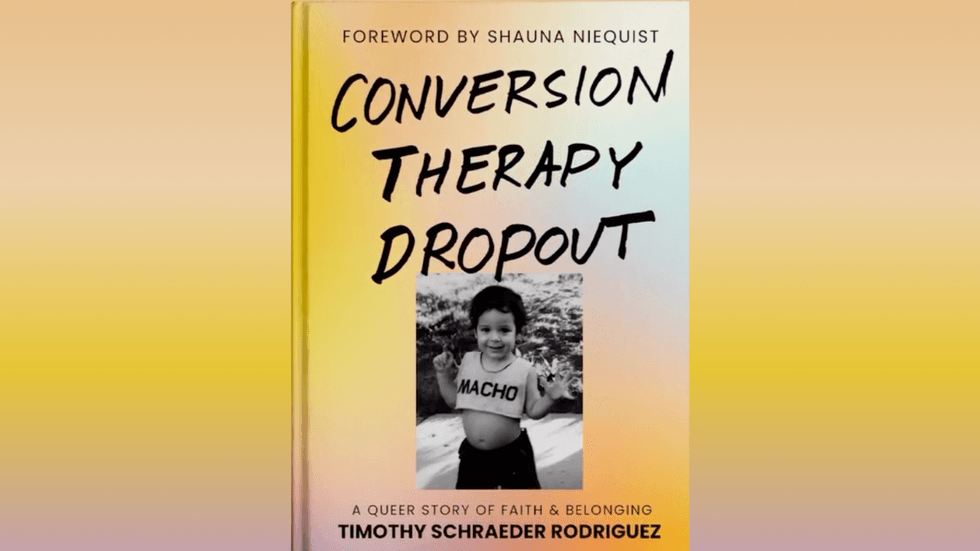
As a child in Peoria, Illinois, in the 1980s, Timothy Schraeder Rodriguez couldn't hide his disappointment when he unwrapped what he had hoped would be an Easy-Bake Oven – finding basketball equipment instead. Like many young queers in the making, he had yet to find words for his feelings. And with a family that belonged to the evangelical Assemblies of God church, it didn't take long for the inkling to turn to shame."The fear that I might be fundamentally unacceptable to God and that there was something in me that needed to be fixed would shape my relationship with faith for decades to come," writes Schraeder Rodriguez in his compelling new memoir: Conversion Therapy Dropout: A Queer Story of Faith and Belonging.Fresh on the shelves, both heartfelt and heartbreaking, the account documents the author's foray into eight years of “conversion therapy" – the dangerous and discredited practice of trying to change a person’s sexual orientation or gender identity – and the decade of depression and substance abuse left in its wake.The telling couldn't be more urgent. On March 31, 2026, a landmark ruling by the Supreme Court struck down Colorado’s ban on conversion therapy (Chiles v. Salazar), placing a therapist’s “professional speech” rights above the well-being of minors who are struggling with sexual and gender identity.It's also an evergreen tale – one told for decades by those who made it out. Not everybody has.Schraeder Rodriguez's journey kicks off as a teenager, when in a desperate search for transformation, he began pursuing “ever-grander” experiences, from revival services to worship concerts, searching for the spiritual formula that would rewire who he was at his core. He found purpose within church walls, eventually becoming the digital mastermind behind social media for some of the world’s largest megachurches.Conversion Therapy Dropout exposes the darker side of these ministries that not only damaged individuals, but weaponized their
How a 'Conversion Therapy Dropout' found belonging after religious trauma
This is a summary from The Advocate. Read the complete article on their website.
Read Full Article on The Advocate
Opens in a new tab. QueerLine is not responsible for third-party content.
The Advocate
This article was automatically aggregated from The Advocate, a trusted LGBTQ+ news outlet. QueerLine curates headlines from verified sources to keep the community informed.