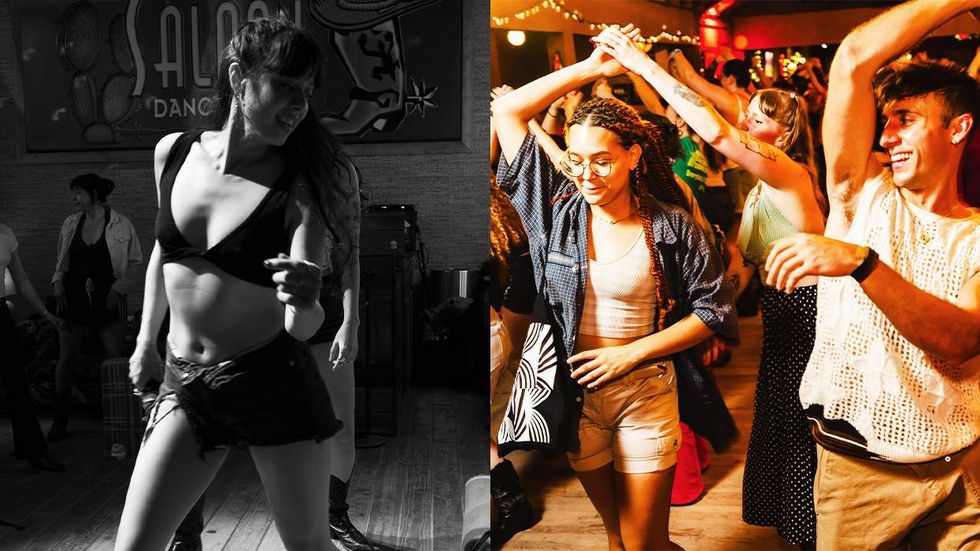
This article was written by guest contributor Diane Anastasio.Last spring, I traveled to Albuquerque, New Mexico, to visit friends and check out the local queer country dance scene. The sun set neon pink behind rows of adobe houses as roadrunners darted through the alleyways. Tucked into the back room of the Albuquerque Social Club, the city’s oldest gay bar, a motley crew of queers danced together on a beat-up wooden floor. Cut-off denim shorts with Dr. Martens met suede boots and glistening gay rodeo belt buckles. The bar was dim and dripping with sweat, holding decades of queer connection in its walls.Advanced dancers hollered dance steps to newcomers along the edges of the room while strangers clasped hands and spun each other in circles, rainbows of hankies swinging from their back pockets. A trans flag billowed in the corner under a string of colorful twinkle lights. Elders danced with young folks as classic country poured from the speakers. Late in the night, some rowdy regulars formed a line for the shadow dance, snaking across the floor in one long train and grinding to Tracy Chapman. I’d never seen anything more simultaneously sexy and wholesome in my life. Sugarfoot onstage at Buck Wild in BrooklynHugh HobbsQueer country-western dancing — particularly line dancing and two-step — has been thriving in the United States for half a century. Today, it’s experiencing a vibrant resurgence, fueled by steamy social media reels, a shifting country music landscape, and a widespread hunger for in-person connection, evident in the sultry shadow dance worm I witnessed in New Mexico. Where I live in Southern California, you can find a queer line dancing event almost every night of the week. This wasn’t the case just a few years ago.During the pandemic, iconic gay country bar Oil Can Harry’s closed, forcing Los Angeles’s queer country-western dance community to improvise. No stranger to pandemics and skilled in resilience, queer folks figured out how to f
The rise of queer line dancing: ‘A bit like going to church’
This is a summary from The Advocate. Read the complete article on their website.
Read Full Article on The Advocate
Opens in a new tab. QueerLine is not responsible for third-party content.
The Advocate
This article was automatically aggregated from The Advocate, a trusted LGBTQ+ news outlet. QueerLine curates headlines from verified sources to keep the community informed.