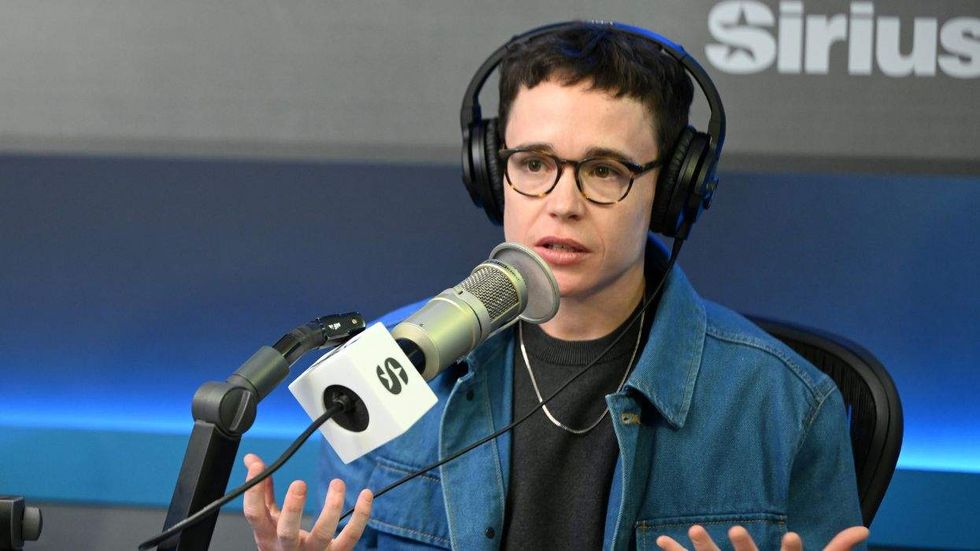
For generations, many Americans have been taught that biology is simple: male and female, dominant and submissive, heterosexual and reproductive. Nature, in this telling, follows rules. Men compete. Women nurture. Anything outside that framework is unnatural.Elliot Page wants viewers to reconsider it all.In Second Nature, a visually lush and unexpectedly funny new documentary narrated and executive-produced by the transgender actor, queerness is not presented as an anomaly or an ideological invention, but as a recurring feature of life on Earth itself. Penguins form same-sex parenting pairs. Clownfish change sex. Bonobos use sex to resolve conflict. Seahorse fathers carry pregnancies. In some primate societies, females dominate social hierarchies. Across species, the film argues, the rigid binaries humans insist upon begin to dissolve.The film premieres in Los Angeles on Friday.The documentary arrives at a moment when “biology” has become one of the most weaponized words in American politics.Republican lawmakers across the country have spent the last several years invoking biological essentialism to justify restrictions on transgender health care, school participation, bathroom access, military service, and public visibility. Conservative activists routinely describe trans identity as a rejection of science itself.In the U.S., a broad political effort is underway to narrow public understandings of gender and sexuality, from book bans and curriculum restrictions to state laws limiting how LGBTQ+ people can be discussed in schools. Male lions matingRobert HofmeyrSecond Nature argues that the science itself tells a far more complicated story.“There are approximately 8.7 million living animal species on earth,” Page says in the film’s opening narration. Humans, he explains, have long been taught that sexuality and gender exist according to rigid natural laws: males are aggressive and dominant; females are passive and coy; sex is exclusively reproductive and he
Elliot Page learned 'the obvious truth' from his new doc: Nature is queer
This is a summary from The Advocate. Read the complete article on their website.
Read Full Article on The Advocate
Opens in a new tab. QueerLine is not responsible for third-party content.
The Advocate
This article was automatically aggregated from The Advocate, a trusted LGBTQ+ news outlet. QueerLine curates headlines from verified sources to keep the community informed.