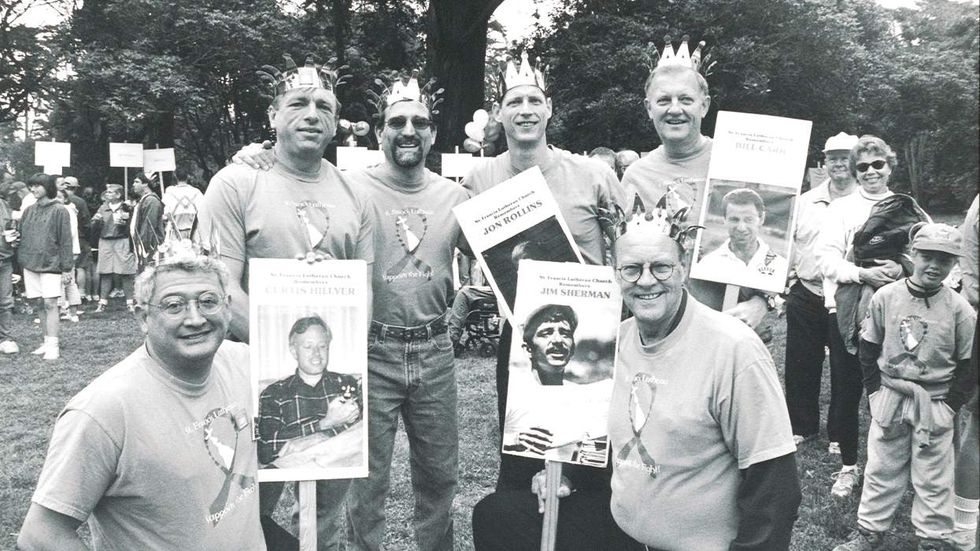
In the 1980s, a dangerous new virus — which would eventually be known as human immunodeficiency virus, or HIV — started spreading rapidly throughout the world. In the early days of the epidemic in the U.S., HIV was mainly affecting gay and bisexual men, who began getting ill and dying at alarming rates. The growing health crisis was compounded by the conservative Reagan administration, which largely ignored the epidemic, as it didn’t seem a threat outside of the queer community. A group of men hold photos of friends and lovers lost to HIV at the 1999 AIDS Walk.courtesy AIDS Walk San FranciscoAs panic, fear, anger, and the death toll continued to increase, many Americans took to the streets to demand federal and societal attention to the epidemic. Alongside contemporary activist groups like ACT UP and GMHC (Gay Men’s Health Crisis) on the East Coast, San Francisco also joined the national fight against HIV some four decades ago. The city’s first official AIDS Walk took place in Golden Gate Park on July 19, 1987, with approximately 3,400 participants. AIDS Walk founder Craig Miller with Dianne Feinstein at the first walk in 1987courtesy AIDS Walk San FranciscoSince then, AIDS Walk San Francisco has “inspired countless thousands of Bay Area residents to walk, donate, and volunteer in the fight against HIV/AIDS,” as its website states, and has raised over $100 million over the years for dozens of organizations across the Bay Area. Many celebrities and VIPs have also supported the walk over the past four decades, including former San Francisco Mayor (and late U.S. Senator) Dianne Feinstein, California Gov. Gavin Newsom, Joan Baez, Robin Williams, Armistead Maupin, Leeza Gibbons, Debbie Gibson, Gillian Anderson, Mike Myers, Rita Moreno, and dozens of others.Today, the annual event continues to be one of the largest and most visible HIV/AIDS fundraisers in the West. To commemorate its 40th anniversary, this year’s walk will take place on the same date and l
Reflecting on 40 years of AIDS Walk San Francisco
This is a summary from The Advocate. Read the complete article on their website.
Read Full Article on The Advocate
Opens in a new tab. QueerLine is not responsible for third-party content.
The Advocate
This article was automatically aggregated from The Advocate, a trusted LGBTQ+ news outlet. QueerLine curates headlines from verified sources to keep the community informed.