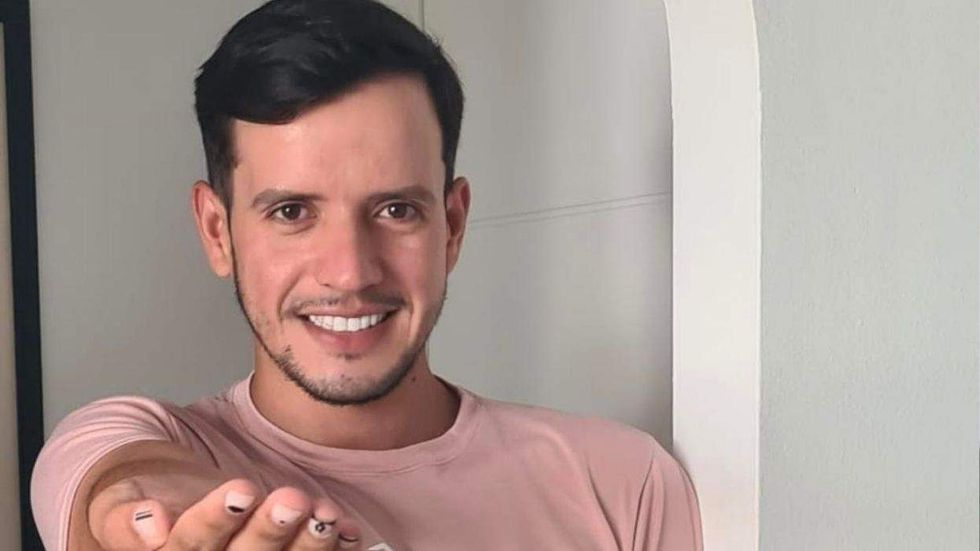
There are two words Andry Hernández Romero still struggles to hear."Requisa.""Conteo."Search. Count.Nearly a year after he emerged from El Salvador's notorious CECOT prison, where he was deported after the Trump administration accused him of gang affiliation, allegations he has consistently denied, those words can still send a jolt through his body."If I'm walking down the street and I see a police officer carrying handcuffs or a baton," he told The Advocate, "it affects me."Speaking through a Spanish-language interpreter during a recent video interview from Spain, Hernández Romero described a life that is safer than it was a year ago, but not yet free. The gay Venezuelan makeup artist is no longer locked inside one of the world's most infamous prisons. He is no longer wondering whether he will ever see the outside world again. But freedom, he says, remains incomplete.Related: Inside the movement that freed gay makeup artist Andry Hernández Romero from a hellholeFinding safety after tortureHernández Romero became one of the most recognizable faces of the Trump administration's use of the Alien Enemies Act against Venezuelan migrants. In March 2025, he was among hundreds of Venezuelan men sent to El Salvador's Terrorism Confinement Center, known as CECOT, despite never being charged with a crime in the United States. Advocates and attorneys argued that officials relied on deeply flawed evidence, including tattoos, to label men as gang members.His asylum application in Spain is still pending. He is not yet working. He has no stable income. And the trauma of what happened to him continues to shape nearly every day of his life. "I'm in a safe place," he said. "But this bitter experience isn't going to disappear overnight."For LGBTQ+ Americans, Hernández Romero became more than an immigration case. He was an out gay asylum seeker who said he fled persecution in Venezuela only to find himself at the center of one of the Trump administration's most controversial and d
Gay CECOT survivor rebuilds his life in Spain while speaking up for voiceless immigrants in America
This is a summary from The Advocate. Read the complete article on their website.
Read Full Article on The Advocate
Opens in a new tab. QueerLine is not responsible for third-party content.
The Advocate
This article was automatically aggregated from The Advocate, a trusted LGBTQ+ news outlet. QueerLine curates headlines from verified sources to keep the community informed.